The best song of 2011 came to us relatively early in the year, when 2010 was still fresh in our minds. There was still quite a bit of music to be released, including the album on which it was released. Hell, many of us even had the silly notion that despite the fact that the year as a whole had been a bit of a letdown, we might still pull through. Score one for optimism, right? Haha, yeah. About that.
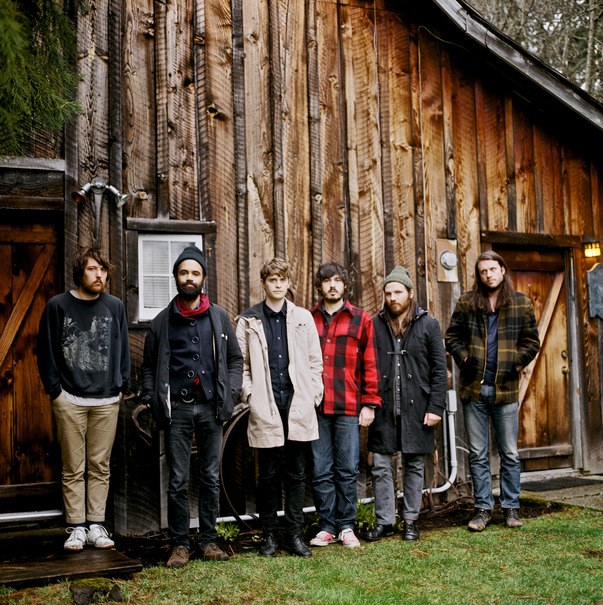
But Robin Pecknold has a strange way of keeping one hopeful, despite what has occurred and what is yet to happen. How this occurs is anyone's guess, be it the good vibes his band emits or the generally upbeat music they create. But somehow, no matter how bad it got in 2011, we always had Fleet Foxes.
"Helplessness Blues," from the album of the same name, begins with the gentle strumming of an acoustic guitar. Pecknold, his voice by now unmistakable after the runaway success of his band's debut record, sings of the uniqueness he was told he possessed as a youngster, before releasing that perhaps it is best to become a part of "some great machinery, serving something beyond me."
Fleet Foxes set the bar high for their second record, and "Helplessness Blues" far surpasses it. The song soon balloons into a more plugged-in affair, with drums and electric guitar complementing the sudden slash in tempo.
"What good is it to sing helplessness blues?" Pecknold asks, holding up the inherent optimism of the song. In an age where no one really knows where we're heading, Pecknold remains hopeful, and knows that doing otherwise will bring no good tidings. It's a lesson from which we can learn -- instead of pessimism reigning in our lives, why not have a healthier outlook on life? What good is it to live otherwise?
With beautiful harmonizing and instrumentation, Fleet Foxes created a song that may just define the decade with its message. It's tough to say where we're going, but perhaps if all of us had an orchard or two in our lives, we'd be a little happier.
2011's best electronic fare came from a French artist that isn't Daft Punk or Justice. Who'd've thunk it?!
M83, a.k.a. Anthony Gonzalez and a score of backing musicians, released Hurry Up, We're Dreaming in the final quarter of 2011, a double album of epic proportions. Gonzalez utilized big guitars to go with his skyscraper synths, creating some of the loudest and most epic music to hit the airwaves this year.
"Midnight City" features a bouncing synth that sounds like a strange mutated scream at its onset, which keeps appearing time after time whenever the song needs extra 'oomph.' To this day, I'm still not sure quite exactly what M83's doing there, but its addition to the wall of sound the band creates drives the song over the edge.
Featuring monolithic synths and drums, "Midnight City" is every bit as huge as any other song released this year, especially in the electronic genre. The song quiets slightly when Gonzalez's vocals come in, but there's always the grandiosity lurking. The album as a whole was called one of the biggest of the genre in a while, and it's easy to see with "Midnight City." This is electropop on possibly its grandest scale yet.
And again, Year of the Sax alert! "Midnight City" features a jazzy sax solo toward its end, rising above the cacophony of electronic sounds. Its addition only furthers the strangely '80s vibe the song emits.
Do yourself a favor and listen to this entire album -- yes, the whole thing! It's a double album, but one of the most brilliantly conceived of its kind. "Midnight City" is only the beginning of this incredibly grandiose electronic opus.
As this is a countdown that features a mere song per artist (with a few technical exceptions), it was tough to choose one song from Adele's miraculously great 21 that stood out above the rest.
In fact, when I was creating this list, I decided that no matter which of the two songs I was considering ended up being on the list, the order of the countdown altogether would not change. "Rolling in the Deep" and "Someone Like You" are both better than any other song I've mentioned thus far, but I don't find either of them to be of a higher quality than my top two. I hope that puts into words how much I love both of these songs.
In the end, I had to go with "Someone Like You." Weepy? Yes. But my god, can this woman write a breakup song. Well, soooort of a breakup song. I suppose the breakup's already technically happened, but this is the final separation, so to speak.
It's a song many can relate to. Adele's been separated from this lover for quite some time, but still harbors feelings for the object of her affection. But we are led to believe that it's been years since the fling, as said object has settled down, found a girl and is married. While that in particular may not have happened to all of us, I'm sure many can relate to the concept of rediscovering a lover for whom one still has feelings, only to find that they're quite happy without them and have moved on.
That said, unlike "Rolling in the Deep," this is not a song of anger. Adele only wishes "the best" for her former lover, claiming that she'll find someone like him one day. It's a refreshing spin on the subject matter, as many instances find the artist decrying the object of affection and denouncing him/her instead of wishing good tidings for them.
Adele crossed a lot of boundaries in 2011, and this is the song that solidified her as more than a one-hit shocker in America. Her brand of pop inexplicably caught on in America this year (not that I'm complaining!), and with "Someone Like You," she was vaulted to star status with one of the best ballads of the young decade.
If you're looking for the underdog song of the year, this is your jam.
The Belle Brigade appeared on the scene this year with their self-titled debut. The duo, consisting of the Gruska siblings Barbara and Ethan, flew under the radar for the most part, but were still acclaimed critically by those that happened to come across their music.
The album itself was a wonderful 2010s take on '60s folk rock tunes -- understandable, given that the band has named Paul Simon's solo work as one of their biggest influences. In particular, "Losers" invokes the harmonizing of Simon & Garfunkel, with an updated folk rock sensibility for the times.
"Losers" is defiant, a harmony-laden song that takes a stand against the social mores of our generation -- or really, any generation... the song is fairly ambiguous when it comes to its timeframe. "There will always be someone better than you," they sing at first, changing later to "There will always be someone worse than you." "Don't care about being a winner," they sing, before laying out the list other things they simply don't care about being.
Possibly the most telling lyric of the song -- "I'm removing myself from the queue," they sing. The song is all about going against society's constructs, even if it means being called a 'loser.' In terms of messages, it's one of the best of the year, and the catchy melodies certainly don't hurt.
It's inspiring and timeless, a song which rises and rises to its inevitable climax, with howling vocals from the Gruska siblings. "Losers" was among the best indie rock had to offer this year, a telling prelude to a duo who will hopefully be around for quite some time.
Many found Lady Gaga's Born This Way to be overly preachy, overproduced and a significant departure from her early material -- too significant, in fact, that some jumped the ship of Gaga around the release of the album's eponymous first single.
On the other hand, if you were me, you loved the new direction Gaga took, and didn't mind the craze that hit around February one bit. As a cohesive album, Born This Way is one of the best records to come from the new electronic music craze, and it's nice to see an artist that believes that pop music can resonate and make a statement in an age where the concept is increasingly rare.
Some might argue that "Born This Way" ended up the biggest single from the record, given its huge impact on the Billboard Hot 100 upon its release. However, while I am a big fan of that song (potential Madonna knockoff? Who cares, it's catchy as fuuuuck), I argue for "The Edge of Glory," which didn't hit No. 1 but maintained its allure for months into summer.
The electro rock production from Fernando Garibay cannot be understated. Gaga's contribution is, of course, highly important to its success, but the pounding techno of the song makes it one of the best pop songs the genre has recently produced.
Gaga's edge-of-the-world vocal is one of her best to date. The song is already huge, and on the chorus, she rises to the occasion and then some, with a magnificent vocal run that furthered its grandiosity.
The late Clarence Clemons makes an appearance, too -- on the song's bridge, with a larger-than-life saxophone solo. Speaking of which -- 2011: Year of the Sax, yes? Of course. This song, "Last Friday Night," "Mr. Saxobeat," "Something to Believe In," "Midnight City"... what on earth was everyone's infatuation with the instrument this year? Me, I'm still waiting on the accordion resurgence. "Stereo Love" got us started, let's get this shit going.
Even the title of the song suggests an epic soundscape, and that's exactly what Gaga pulls off with "The Edge of Glory." A few of her singles may not have performed up to the ridiculously high standards of many, but looking back on the 2010s, it will be hard to avoid talking about this song as one of its best.
2011 was the year of Odd Future, and Tyler, the Creator, the collective's ringleader, led the way. The center of attention in almost every respect, the 20-year-old rapper released Goblin, which garnered him praise from a number of publications and a Best New Artist award at the 2011 MTV Video Music Awards.
I think something we can all agree on when it comes to Tyler is that, as he says himself on "Goblin," he's "not that great a rapper." No one's falling head over heels for Tyler's flow or rapping skills. So, what's the allure? Why was Goblin arguably the most talked-about rap record of 2011, and maybe even the biggest had it not been for Watch the Throne?
Part of it has to be the DIY nature of Tyler's music, itself seemingly a backlash to the sleek, polished nature of modern rap. For those disillusioned with the direction of the genre, this can only be a breath of fresh air. Don't count out the rawness of the music, either -- and not just in terms of his vocal. There's an edge to the music that most mainstream rappers today wouldn't even dare to gravitate toward.
"Yonkers" was the song that propelled Tyler into the stratosphere, and should have scared every living rapper out there -- except, perhaps, for artists like Jay-Z and Kanye, whose appeal is all-but-solidified no matter what at this point. This was not only a backlash to overproduced rap, it was a full-frontal assault.
Tyler's always been under scrutiny for his misogynistic, sometimes overly-vulgar lyrical content, which targets basically anyone and everyone, and at times features lyrics that can be construed as insensitive toward the homosexual community. With "Yonkers," his lyrics aren't exactly as controversial as some of his other tracks, but it's still a shock to anyone who's hearing his music for the first time.
In keeping with the theme of Goblin, during which Tyler talks to his therapist about his problems and life, "Yonkers" is introspective, but also a song about the abandon he experiences in New York City. And while Tyler disputes the fact some call his music horrorcore, tell me that backbeat under his rap doesn't creep you the fuck out.
2012 will be an interesting time for Odd Future, as it's still to be seen whether the collective will actually remain relevant or if they're a passing fad. Frank Ocean seems to have something to say about this and may end up the more relevant in the long run, but for now, Tyler, the Creator is one of the biggest new rappers in the game, as well as one of its most provocative figures. What will he do next? It's rumored Wolf, his follow-up, comes out in 2012.
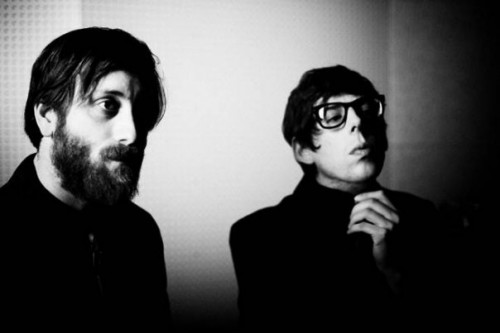
We got a taste of Danger Mouse-produced Black Keys last year with Brothers lead single "Tighten Up," which found the band sounding its most polished yet, for better or for worse. With 2011's El Camino, the producer stepped into the mixing booth for the duration of the record -- and again, for better or for worse. While some found the band's progression to be altogether appealing and the sign of a band coming into its own as an act, others pined for the straightforward blues rock of the band's earlier releases.
"Lonely Boy," the first song released from the new record, is interesting in that it's possibly the least retro song the band has released. And that's saying a lot, because if this were most other artists, we'd be considering this a throwback affair. But with "Lonely Boy" in the Black Keys' case, the band is sounding its most with-the-times.
Make no mistake, though -- this is not necessarily a bad thing. Whatever one's opinions on the new record, it's difficult to deny the allure of "Lonely Boy." It begins with one of 2011's best riffs -- a garage-y lick, the bottom of which drops out almost instantaneously before it rises again, without warning. Pat Carney's drumming is a good time here, too -- very rarely these days (or ever, really) do we find a drummer that keeps time basically only with the snare and bass (sans cymbal), but that's exactly what he does on the verse. What results is a clattering rhythm that runs wild beneath Dan Auerbach's polished riffing.
"I've got a love that keeps me waiting," sings Auerbach on the chorus, joined by a smattering of backing vocalists. It's tough not to pay attention to him -- besides the clever lyrical content, the chorus is one of the catchiest you'll find in rock all year.
"Lonely Boy" proved to mainstream artists what seasoned veteran fans of the band have known for quite some time -- that The Black Keys are no fluke band trapped in olden times. Instead, their status as one of the biggest American rock bands of the day was cemented.
No, that headline's not exactly that false... this song pretty much has everyone in it. Or, at least, a lot. Too many? Maybe. Eh, whatever.
I'm also aware that the song technically was released in 2010. That said, "All of the Lights" found its largest audience in 2011, so I feel compelled to include it.
Kanye's criminally-underrepresented-at-the-GRAMMYs My Beautiful Dark Twisted Fantasy is still talked about to this day as one of the biggest rap releases in a while, and its status as a critically-acclaimed piece of work only helps it along.
One of West's biggest strengths has been his ability to create beats and rhythms that are more than the simplistic drum loops and chords that many hip-hop artists resort to. "All of the Lights" is one of the best examples of this trend yet.
Featuring a majestic choir of horns and driving drums, the song features a plethora of different artists in addition to Kanye. 14 guest vocalists in all. Can you imagine the money spent on this song?
Luckily, things don't get too crowded -- probably due to the fact that only a few of the artists actually have individual parts. Rihanna is featured on the song's chorus, Kid Cudi on his own verse about halfway through, Fergie following Cudi. Elton John, of all people, features on the song's chorus toward its end, and Alicia Keys adds a few well-placed 'oh's.
In addition, Drake, Charlie Wilson, Ryan Leslie, John Legend, The-Dream, Tony Williams, Elly Jackson, Alvin Fields and Ken Lewis provide backing vocals. Damn. Daaaaaaayum.
It's incredibly over-the-top and excessive, but that's become something to be expected from West. And as the end result is beautifully conceived and features some of the top rhymes in rap from the past two years, I think we can give Kanye this.
I firmly believe 2011 was a fantastic year for folk music -- as has been the last two years. One of the resurgence's biggest benefactors so far is Seattle's The Head and the Heart, who makes delightful indie-folk with a slight pop element.
The band opened for The Decemberists in 2011 and scored a hit single in the form of "Lost in My Mind." However it is "Down in the Valley," perhaps the band's most outdoorsy song, that rises above the rest.
With "Down in the Valley," we are introduced to Johnathan Russell's totally-suited-for-folk voice, slightly raspy but totally deserving of the throngs of indie-inclined fans he's sure to garner due to it. As evidenced throughout the song, harmonies are a big part of the band's success, and other members of the six-piece are able to hold their own against Russell's tenor -- including Josiah Johnson, who trades off on lead vocals with Russell.
Lyrically, the song brings to mind a roving fellow whose travels have led him afar -- but in the end, he always comes back to the valley that he calls home. "Lord have mercy on my rough and rowdy ways," Russell sings, the tagline that I'm sure now adorns a thousand Tumblrs everywhere.
Along with warm folk instrumentation, the vocals on "Down in the Valley" create a sound that many will find appealing in this new age of folk music, provided by one of the rising stars of the genre.
After Florence Welch and her lovely machine released Ceremonials lead single "Shake It Out," it wouldn't exactly have been an unsound assumption to make if one said that the singer had spent all her grandiosity on that one song. It was huge, with resonating choirs and a commanding vocal performance from Welch herself.
And then, we got "No Light, No Light."
Florence's newest single features a plethora of backing vocalists and orchestral backing, including a harp, and bombastic percussion. All this combines to create one of the most dramatic and altogether epic performances of 2011.
Welch has always had a penchant for going all-out, but this is ridiculous -- and I mean that in the best way possible. Secondary vocalists and organ give the song a church-like hymnal feel from its onset, and things can only go up from there. The tense drama of the song only rises with each second, the emotion in Welch's voice becoming more and more desperate.
"Heaven help me, I need to make it right," she sings, invoking the religious imagery ever-present in the song's music video.
One of the few times I truly got chills listening to music this year comes toward the song's end, when all other instruments cut out save for Welch's voice, following with the re-addition of bass and drums. It's one of the most powerful instances captured on record this year.
Florence + the Machine may forever be known in America for "Dog Days Are Over" and nothing more, but if there's any justice in this world, "No Light, No Light" will break out big as well. After Adele paved the way for grandiosity in pop music once more, the time is ripe for Florence to take her spot at the top, and this is the song with which to do just that.
Sometimes, your favorite band releases an album that is steeped in the music you've grown to love since starting college. And when that happens, you're powerless to resist.
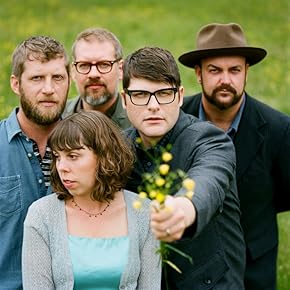
That's exactly what happened with The Decemberists and I in 2011. After the overblown prog rock of The Hazards of Love, the Portlanders toned it down with The King is Dead, a straightforward country-folk romp that ended up their most accessible record yet. Part '80s R.E.M., part Harvest-era Neil Young, The Decemberists created a record that will, along with Southeast Engine's Canary, always remind me of college and Appalachia as a whole.
The band stripped down to very minimal instrumentation on the two "Hymn" songs of the record -- "January Hymn" and "June Hymn." The former finds frontman Colin Meloy singing of clearing away the snow in the dead of winter. The latter, set on a sunny summer day, is among the prettiest the band has recorded.
Armed with a harmonica and his acoustic, Meloy is backed by Jenny Conlee's wafting accordion and Chris Funk's sparse guitar on the chorus, while Gillian Welch provides singsong harmonies. It's a rustic affair, with the band at its best when they're as pastoral as possible.
All this comes to greatest effect on the song's bridge, at which Meloy's and Welch's voices blend to create some of the sweetest-sounding harmonies created in 2011. Meloy launches into a harmonica solo after, poignant and emotional as ever before.
The Decemberists' music has always had its pretty moments, but it's hard to top the harmonies Meloy and Welch provide. And against the rustic background the rest of the band provides, "June Hymn" becomes one of the most hopeful songs about the summer months. "And years from now / When this old light isn't ambling anymore / Will I bring myself to write / 'I give my best to Springville Hill,'" sings Meloy, painting a vivid portrait of pastoral summer we won't soon forget.
Dear Yuck: You're about 20 years late, but seriously, thanks for coming out anyway.
The young Londoners released their self-titled debut in February, and were immediately compared to the likes of Sonic Youth, Dinosaur Jr. and more. And it's easy to see why -- beside the catchy guitar licks, the distortion here is astounding -- especially on "Get Away," my personal favorite from the album.
It's as though the band wanted to sound as authentic as possible -- and if that's the case, it worked. The sound of music is steeped in '90s grunge, so much so that it sounds as though the song could have been released in 1991 rather than 2011.
The fuzzed-out tune also features one of the biggest earworm choruses of the year, one that rises over Mascis-esque guitar that squeals beneath vocalist Daniel Blumberg.
As far as retro goes (what?! we're actually calling the '90s retro now?!), this one took the cake this year. Welcome back, grunge. We missed you.
When Under the Influence of Giants frontman Aaron Bruno resurfaced in 2011 as AWOLNATION, most didn't bat an eye. His band had never captured the success many had predicted it to, with "In the Clouds" being their only, albeit modest, hit.
But many, including more than a few on pop radio, were forced to listen when the anthemic "Sail" marched onto radio. A departure from his earlier, poppier material, "Sail" is rough around the edges, with Bruno's voice cracking more than a few times in his higher register.
Dreamy synths punctuate much rougher, bass-ier electronics that lie beneath. In fact, the song itself is kind of like a dream, with an ever-present nightmare looming. It's sometimes sweet, but there's an inherent darker side that comes out at times with Bruno's vocal.
Electronic-based music may have never been this harsh in 2011. The juxtapositions within "Sail" made for an incredibly popular alt-rock track, one that is still sticking around on the charts to this day. With "Sail," Aaron Bruno finally had his taste of mainstream popularity -- and all he had to do was stretch his voice a little.
Baltimore duo Wye Oak had their best year yet in 2011, capped off with the release of new record Civilian on Merge Records. The band also opened for The Decemberists at the beginning of the band's North American tour (side note: SUPERB sets at the Beacon Theatre in New York as part of that tour), and played an acclaimed set at this year's Sasquatch Music Festival.
The song "Civilian," which was featured in a promo for The Walking Dead's season two premiere, is the duo's best to date. "I am nothing without pretend," sings Jenn Wasner to begin the song, as the sounds of percussion and ambient guitar fill the air behind her.
The guitar lick Wasner provides is intriguing, to say the least (and I say the least mainly because I don't really know what else to say). It's not especially catchy, but I couldn't stop listening to the song at first simply because of Wasner's guitar parts. It's quite unlike most other guitar sounds in rock this year.
"Civilian" eventually launches into a much louder segment, in which drummer Andy Stack provides train-clatter drum hits, all the while playing the keyboard part underneath it all (seriously, this guy plays so many different instruments even live, it's astounding). Soon after, we have a solo from Wasner, who distorts the thing to Kingdom come.
It's one of the moodiest, backwoods songs of 2011, and establishes Wye Oak as a force to be reckoned with in the future. While the rest of Civilian didn't match the highs its title track experienced, it showed us the genius Wye Oak can provide, even as a mere duo. That's a lot of sound coming from just two people.
Canadian folk act The Wilderness of Manitoba remains, as they were at the beginning of 2011, one of the genre's best-kept secrets. A younger brother of Fleet Foxes with poppier sensibilities, the band finally came to America this year with the release of debut record When You Left the Fire, which came out a year earlier in native Canada.
Throughout the record, the subtle sound of a furnace can be heard crackling beneath the music -- a nice touch, considering that many might call some of the songs "fireplace worthy"... that is, the kind of song one would want to hear sitting around a campfire or fireplace, especially in acoustic form.
One of The Wilderness's best is "November," a song frontman Will Whitwham wrote while traversing the Trans-Siberian Railway in Asia. It's a song of solitary longing, complemented by ear-pleasing four-part harmonies. Acoustic instrumentation presides, with different instruments taking a turn depending on the version to which one is listening. The recorded version features a wailing slide guitar, while others more prominently feature the banjo.
"November" exemplifies The Wilderness of Manitoba at their acme. They're a band that can pull off some beautiful harmonies, catchy melodies and warm instrumentation. They're one of the rising acts in folk today -- especially within the smaller subdivision of chamber folk. Again, it's a record that slipped under many's radars, but is a must-listen for any self-described folk music fan out there.
Watch the Throne, the highly-anticipated collaboration between rap giants Kanye West and Jay-Z, lived up to its potential -- and then some. Its singles were huge, and its reach was astounding. There may not have been any other rap release this year that folks not as enamored with the genre listened to -- save, perhaps, for anything released by an Odd Future member.
Hey, speak of the devil -- "No Church in the Wild."
The lead track from Watch the Throne featured Odd Future crooner Frank Ocean on its hook. The album's densest, heaviest song, it featured prog rock-esque instrumentation over Ocean's vocal, an Auto-tuned segment from The-Dream and a steady flow from both rappers.
The song sets the scene for a grandiose record, for sure. Just check Jay-Z's opening lines, which make mention of mausoleums and coliseums. This was one of the biggest releases in rap in years, and 'Ye and Hova made sure it sounded that way.
An essay could be written on the song's lyrical content, arguably the best on the entire record. The rappers tackle religion on the song, with a plethora of religious imagery popping up, beginning with Ocean's opening chorus, which mentions the Great Chain of Being concept of Christianity.
Both are also concerned with power, and the song makes them appear pretty damn powerful indeed. The two biggest rappers in the world say some things, and you listen. That's power already for you.
Watch the Throne in general is an album that can take quite a bit of time to decipher. "No Church in the Wild" is the perfect starting point. Enjoy the rhymes these titans provide, and then look deeper into what they're really trying to say.
It's really quite tough to put into words how beautiful "I Have Never Loved Someone," from New York singer-songwriter My Brightest Diamond (aka Shara Worden), is.
Written as a love song to her young son, the song features eccentric instrumentation (always a mainstay in MBD songs, really) over Worden's surreal vocal. There's multiple versions of the song out there, including the instrument-laden record version, plus takes that are guitar-based.
But no matter the arrangement, the adoration in the lyrics is still there. A must-listen for anyone who's ever really been in love.
I would include the album version of the song, as I usually do with these posts, but 1) I couldn't find it on YouTube, and 2) Even if I had found it, this is the superior version. Recorded as part of La Blogotheque's Takeaway Shows, the performance is one of the most poignant performances I've ever seen put on tape.
British rock band Elbow returned in 2011 with Build a Rocket Boys!, fairly standard output for the Mercury Prize-winning five-piece. That's not to say it was a bad year for the band, but in no way did they really stand out, either.
Sometimes it takes an eight-minute lead song off the album to really catch one's attention. And that's exactly what Elbow pulled off with "The Birds."
The song's allure lies in the beauty it creates with its many supporting instruments. Singer Guy Garvey doesn't have too much to do throughout the song's first five minutes, his melody fairly stagnant and in a lower register. It's the instrumentation slowly building behind him that really makes the song. Its rising nature is a prelude to the explosion of sound that occurs at the five minute mark.
"The Birds" hits its stride when the strings arrive. Elbow does orchestral rock better than most, and they show it off here. It's the fusion of older stringed instruments and newer rock instrumentation that makes the song so intriguing.
Eventually, the song transforms into a sun-drenched, string-laden opus, with Garvey finally launching into his higher register. One might have expected that things would have gotten to that point before, but it's nonetheless a harrowing experience when the band is at full volume.
What I enjoy most is that the song doesn't even feel eight minutes long. Time well spent, I suppose.
We can chalk DJ Shadow up to another one of those artists still looking to recapture the glory of his or her critically-acclaimed debut album. In Shadow's case, Endtroducing hit big at a time when using just samples to create entire albums was a new concept. He revolutionized the art form with the album, and paved the way for many like-minded artists to do the same.
Alas, creating another release on par with Endtroducing has proved difficult for Shadow. In 2011, 15 years after his debut release, he released The Less You Know, The Better, his first album of new material since 2006. Compared against other records of the genre, it's a solid effort. Compared to Endtroducing or The Avalanches' landmark Since I Left You? It left much to be desired.
Still, the good DJ gave us reason to be excited. He showed that he still has the ability to produce great singular songs, even if they're separated by less-satisfying material. In particular, the album features a two-song combo, one of which appears toward the album's beginning; the other, toward its end. "Sad and Lonely," featuring a sample of Susan Reed's "I'm Sad and I'm Lonely," begins this cycle, with Reed's voice seemingly distant against piano and violin.
Later in the album comes "(Not So) Sad and Lonely," a rebuttal to its predecessor. This song also features Reed's vocals, but to a lesser extent. Here is where the record ends, and on an incredibly poignant note.
The majority of Reed's vocal that is utilized comes from a particular point in the usual song in which she sings, quite simply, "I'm troubled."
The violin present in "Sad and Lonely" returns here, but there's much more atmosphere to be found on the latter song. Most notably, slowly-rising guitar thunders beneath Reed and the strings.
DJ Shadow has always been able to create a lush, atmospheric soundscape, sometimes ambient and sometimes a little more jarring or melodic. Here, he combines the two into a song that should please both folks interested in pleasant background music and connoisseurs of a beautiful vocal from the late Reed, who passed away last year.
If there's any part of The Less You Know... that anyone actually listens to, it should be these two songs. Both tunes are soothing and altogether beautiful.
If you're not a big fan of indie rock, one of the best rock records of 2011 might have passed you over. In a year where pure, straightforward rock was in one of its weakest states to date, bands like Foo Fighters and Cage the Elephant rose to the forefront, with little competition. Thus, it was as good a time as any for San Francisco duo Girls to stand out above the rest.
They definitely took the opportunity and went with it. Father, Son, Holy Ghost may not be as hard-rocking as some of the others mentioned, but it features some of the plain-and-simple best rock songs written all year, including the best Sabbath-inspired fare with "Die."
But it's "Honey Bunny" that resonates most purposefully. It's rooted in the music of the 1960s, with singer Christopher Owens a dead ringer for Buddy Holly.
Throw in a jangly-as-fuck guitar riff and pulsating drums, and you have a recipe for success even before the sunny chorus and surf rock guitar run kicks in.
Indie rock denizens: this was your best summer song of 2011, even though it wasn't actually released during the summer months. Quite simply, nothing was better.